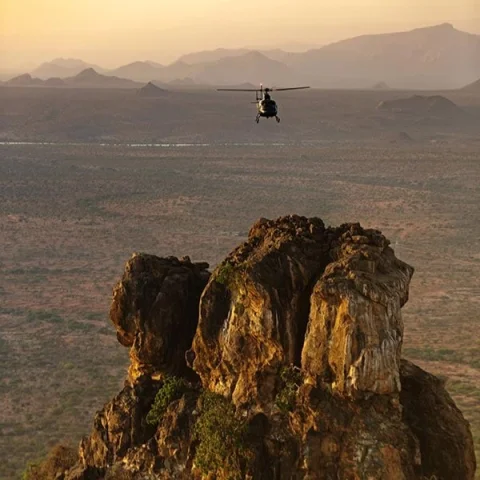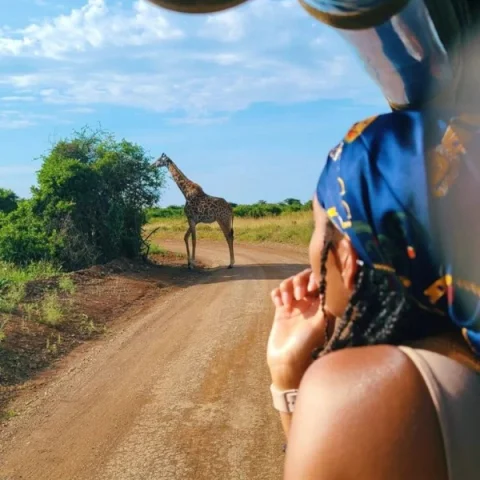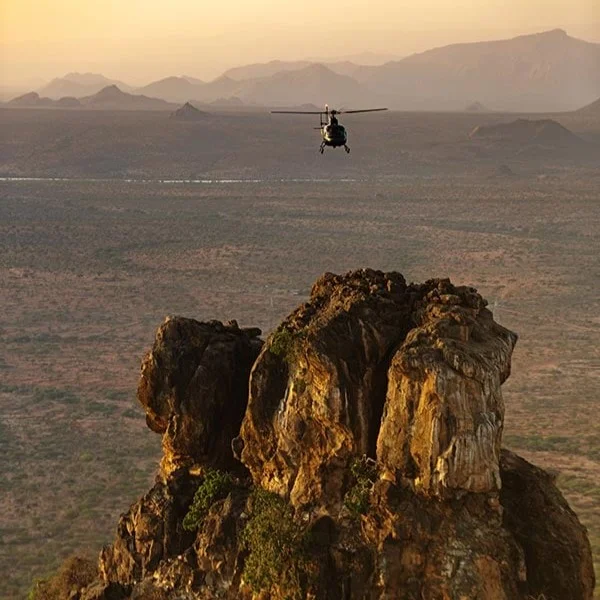
There's a moment on every ground safari vehicle stuck behind three others at a single sighting, dust rising off the track, a herd visible only through a gap in the acacia where the same thought crosses almost every traveler's mind: what does this actually look like from above? A helicopter safari answers that question directly, and for travelers who've done the classic game drive before, or who simply want to see Kenya's landscapes the way few visitors ever do, it tends to be the single most memorable thing they do in the entire country.
It's also one of the most misunderstood parts of Kenya's safari offering assumed to be either wildly out of reach financially, or a gimmick that trades genuine wildlife viewing for a novelty ride. Neither is quite right and getting the most out of a helicopter safari depends heavily on how and with whom it's planned.
At MTP, this is exactly the kind of experience we build properly, rather than treating as an add on.
What a Helicopter Safari Actually Is
A helicopter safari isn't a replacement for a ground safari it's a different way of experiencing the same landscapes and the two work best in combination rather than as alternatives to each other. Broadly, helicopter safaris in Kenya take one of a few forms:
Scenic flights over iconic landscapes. A dedicated flight often 30 minutes to an hour over a specific area purely for the aerial view: the Great Rift Valley escarpment, the Maasai Mara's river systems and migration herds from above, or the snowcapped profile of Mount Kenya.
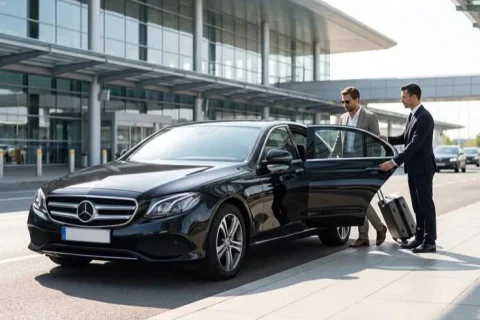
Fly-in safaris between camps. Rather than a multi-hour road transfer between parks or conservancies, a helicopter moves you directly, turning what would be a tiring drive into a scenic 20- to 40-minute flight genuinely practical as well as spectacular.
Helicopter-assisted game viewing. Some operators combine a low-altitude flight with a landing at a remote, otherwise inaccessible spot for a bush breakfast, a walking safari or simply time on the ground in a location no vehicle based safari reaches.
Full or half-day helicopter safari packages. A more comprehensive experience combining several of the above an early flight over the landscape, a landing for a bush breakfast or picnic, further aerial game viewing, and return built as a complete day rather than a single short flight.
Each of these serves a different purpose and part of planning a helicopter safari properly is matching the right format to what you actually want out of it a photography-focused scenic flight is a very different booking from a fly-in transfer between the Mara and Amboseli.
Why Kenya, Specifically, Rewards an Aerial Perspective
Not every safari destination benefits equally from a helicopter view, but Kenya's geography makes it an unusually good fit.
The Great Rift Valley is genuinely best understood from above. Ground level, it's a dramatic backdrop. From a helicopter, the sheer scale of the rift the escarpment walls, the valley floor, the lakes strung along its length becomes properly comprehensible in a way that's hard to convey any other way.
The Maasai Mara during migration season is a different experience entirely from above. Wildebeest and zebra herds that look like scattered groups from a vehicle reveal their true scale from the air columns stretching for kilometers, river crossing points visible in their full context, predator movement patterns that are almost impossible to appreciate from ground level.
Mount Kenya's profile is best appreciated from the air. For travelers not planning to climb it, a scenic flight around Africa's second-highest peak offers views of glaciers, alpine terrain and surrounding forest that a ground-based itinerary simply can't reach.
Kenya's conservancies and remote regions open up entirely. Laikipia, the Chyulu Hills, parts of Amboseli's wider ecosystem regions with limited road access become genuinely reachable by air, opening up landing spots and viewpoints that see a fraction of the visitor traffic of the main circuit.
This isn't true everywhere. A flat, relatively uniform landscape doesn't gain as much from an aerial perspective as Kenya's varied topography does which is part of why helicopter safaris here consistently rank among the most talked about experiences travelers have, rather than being a nice-to-have add-on.
What It's Actually Like: Setting Realistic Expectations
It's worth being direct about what a helicopter safari does and doesn't deliver, since expectations shaped by dramatic marketing photography sometimes don't match the reality.
Wildlife viewing from a helicopter is different, not simply "better." You'll see landscape-scale patterns herd movements, terrain, water systems with real clarity, but close up animal behavior, the kind of extended, intimate sighting a ground vehicle allows (a lion pride resting, an elephant family interacting), is not what an aerial view is for. The two genuinely complement each other rather than one replacing the other.
Noise and altitude affect wildlife differently depending on how the flight is operated. Responsible operators maintain appropriate altitude over sensitive wildlife areas specifically to minimize disturbance, and a well-run helicopter safari is planned with this in mind rather than prioritizing a dramatic low pass over animal welfare.
Weather genuinely affects the experience. Early morning flights typically offer the calmest air and clearest visibility; afternoon flights can be bumpier as thermals build up over the day. This is worth knowing when choosing a flight time and a good operator will be upfront about it rather than booking whatever slot is convenient.
It's physically brief but experientially dense. Even a 45-minute flight covers ground and delivers perspective that would take hours to experience from a vehicle the value isn't measured in time spent, but in what that time actually shows you.
Setting these expectations properly up front is part of why we walk every helicopter safari client through exactly what to expect before booking, rather than letting marketing imagery do the explaining.
What It Costs and Why
Helicopter safaris are genuinely more expensive than ground-based game drives and it's worth understanding why rather than treating the cost as arbitrary.
Helicopters are expensive to operate and maintain, require highly trained pilots and in Kenya are subject to strict aviation safety and maintenance standards costs that get reflected directly in pricing. Flight time is also priced by the hour in a way that ground transport generally isn't, meaning a longer or more elaborate itinerary (multiple landing points, a full day package with bush breakfast) costs meaningfully more than a single 30-minute scenic flight.
That said, helicopter safaris aren't exclusively the preserve of ultra-luxury travelers. Shorter scenic flights 20 to 30 minutes over a specific landscape are considerably more accessible than a full day package and make a genuinely worthwhile one off addition to an otherwise standard safari itinerary rather than requiring a complete rebuild of your trip budget. We're upfront about the real cost range for different formats during planning, so there's no ambiguity between "helicopter safari" as a marketing phrase and what a specific option actually costs.
Fly-in transfers, worth noting, sometimes offset part of their cost against what you'd otherwise spend on a long road transfer or a domestic flight and additional transfer meaning the genuine premium for choosing a helicopter over an alternative transport option is often smaller than it first appears, once you account for what you'd have paid anyway to get between locations.
Choosing the Right Helicopter Safari for Your Trip
Not every traveler wants or needs the same format and matching the right one to your actual trip matters more than defaulting to the most elaborate (or most heavily marketed) option.
If you want a single, spectacular addition to a ground safari: a 30- to 45-minute scenic flight over the Mara or the Rift Valley escarpment, timed for early morning light, is usually the right call memorable, self-contained and doesn't require restructuring the rest of your itinerary.
If you're combining multiple parks or conservancies: a fly-in transfer between locations turns otherwise tiring road time into part of the experience itself and is worth strongly considering on any itinerary that would otherwise involve several hours of driving between stops.
If photography is a priority: timing matters more than almost anything else early morning flights offer the clearest light and calmest air and a good operator can advise on routing that favors photographic opportunities (following river systems, timing passes over migration herds) rather than a generic scenic loop.
If you want a full, immersive day: a half- or full-day package combining a flight, a landing for a bush breakfast or picnic in a remote location and further aerial game viewing delivers the most complete version of the experience, at the corresponding cost.
If accessibility or mobility is a factor: a helicopter safari can, in some cases, make otherwise physically demanding safari experiences remote landing spots, difficult terrain accessible in ways a ground-based itinerary can't, worth discussing directly if this applies to your trip.
We talk through your actual priorities budget, photography interest, whether you're combining it with a transfer you'd need anyway before recommending a specific format, rather than presenting a single default package.
Safety: What Actually Matters
Aviation safety is, understandably, the first serious question most travelers have about a helicopter safari and it deserves a direct answer rather than vague reassurance.
Operator credentials matter enormously, and vary. Kenya has a range of helicopter operators, and their safety records, maintenance standards and pilot experience are not uniform. We only work with operators holding proper Kenya Civil Aviation Authority certification, with maintenance records and pilot experience we've verified directly, not simply the most prominently marketed option.
Weather-based flight decisions should never be negotiable. A reputable operator cancels or delays flights for weather without hesitation, regardless of a traveler's tight schedule and any operator willing to fly in genuinely unsafe conditions to avoid disappointing a paying customer is not one worth booking with.
Pre-flight briefings are a real safety measure, not a formality. A proper safety briefing seatbelts, doors, what to do in various scenarios should happen before every flight and its presence (or absence) is a reasonable indicator of how seriously an operator takes safety generally.
Insurance and emergency protocols should be clear before you fly. This includes confirming what coverage applies to the flight itself and what emergency response protocols exist for the specific region you're flying over questions worth having answered before booking, not raised for the first time at the helipad.
We vet every helicopter operator we work with against these standards specifically, and we're glad to walk through exactly what that vetting involves if a client wants the detail before booking this is not an area where "trust us" should be sufficient on its own.
A Sample Day: What a Full Helicopter Safari Experience Looks Like
To make this concrete, here's roughly how a full-day helicopter safari might unfold, adjusted to the specific region and package.
Early morning departure, timed for the calmest air and best light typically shortly after sunrise. A scenic flight over your chosen landscape, whether that's the Mara's river systems and migration herds, the Rift Valley escarpment, or the approach to Mount Kenya, with the pilot narrating and pointing out notable sightings or landmarks along the way.
A landing at a remote, otherwise inaccessible spot for a bush breakfast table set up in a location a ground vehicle would likely never reach, with genuine silence and isolation as part of the experience.
Further aerial game viewing or a second scenic leg, often routed differently from the outbound flight to cover new ground rather than retracing the same path.
Return, typically completed well before the midday heat affects flying conditions, back to your camp or lodge in time for lunch and the rest of your day's plans undisturbed.
The whole experience, door to door, often takes three to four hours a relatively small slice of a longer safari itinerary that tends to become the single most talked-about part of the entire trip.
Best Times of Year for a Helicopter Safari
Timing shapes a helicopter safari as much as it shapes any ground based trip and in some ways more, since visibility and air conditions genuinely affect the experience.
July to October, migration season in the Mara, offers the single most dramatic subject matter for an aerial flight herds numbering in the hundreds of thousands, visible in a way no ground vantage point can match. This is also the busiest and most in-demand window for helicopter bookings, so early planning matters more than at any other time of year.
The dry seasons generally (January–March, July–October) offer the clearest air and most reliable flying conditions, with less cloud cover and haze than the rainier months a meaningful factor for photography-focused flights in particular.
The rainy seasons (April–May, November) can still offer good flying windows, particularly in the early morning before afternoon storms build, and the landscape itself takes on a dramatically green, lush character from the air that's genuinely striking in its own right worth considering for travelers who prioritize dramatic scenery over guaranteed clear skies.
Early morning, regardless of season, is consistently the best time of day to fly. Calmer air, softer light, and generally better wildlife visibility as animals are most active before the heat of the day sets in this is why we default to sunrise or shortly-after departures whenever a client's schedule allows it.
How a Helicopter Safari Fits Into a Broader Kenya Itinerary
One of the most common questions we get isn't whether to do a helicopter safari, but where it fits into an already-planned trip. A few patterns work particularly well.
As a single dramatic addition to a Mara-focused safari one morning flight added to an otherwise standard multi-day ground safari, timed for a rest morning or a day with a lighter ground itinerary, so it doesn't compete with other planned activities for energy or attention.
As the connecting leg between two safari locations, replacing what would otherwise be a multi-hour road transfer or a domestic flight plus additional transfer — genuinely practical as well as memorable, and a strong option for itineraries combining, say, the Mara with Laikipia or Amboseli.
As a standalone half-day experience bookended by rest, for travelers who want the helicopter safari itself to be a complete, unhurried event rather than squeezed between other activities often paired with a slower morning or afternoon at camp on either side.
As part of a honeymoon or anniversary itinerary, where a single, beautifully timed flight — sunrise over the Mara, a private bush breakfast at a remote landing spot becomes one of the defining moments of the trip, worth planning with particular care around timing and privacy.
We build this into the wider itinerary conversation from the start, rather than treating the helicopter safari as a separate booking bolted onto a finished plan.
Common Questions Travelers Ask Us
Is a helicopter safari worth it if I'm already doing ground game drives? For most travelers, yes the two genuinely complement rather than duplicate each other, and a single well-timed scenic flight added to an otherwise standard ground safari is one of the most consistently well-reviewed additions we arrange.
Can I bring a professional camera or drone equipment? Cameras, yes, generally without restriction beyond normal safety guidance from the pilot. Drones are a separate matter with their own regulatory restrictions in Kenya's airspace and near wildlife areas, and need to be checked and cleared specifically rather than assumed to be permitted.
Is there a weight limit? Yes — helicopters have strict weight and balance requirements, and this needs to be confirmed accurately for every passenger during booking, not estimated. This isn't a formality; it's a genuine safety requirement.
What if the weather doesn't cooperate on the day? A reputable operator will delay or reschedule rather than fly in unsafe conditions, and a well-planned Kenya itinerary should build in enough flexibility to accommodate this — something we factor into scheduling from the outset rather than booking a flight on the one day with zero room to shift it.
Is it noisy or disruptive to wildlife? Responsible operators maintain altitude guidelines specifically designed to minimize disturbance, and we only work with operators who take this seriously — a genuine consideration both for conservation reasons and because disturbed wildlife makes for a worse experience for everyone anyway.
How far in advance should I book? Helicopter safaris, particularly during peak migration season, are worth booking well ahead availability is more limited than standard game drive vehicles, and popular timing slots (early morning, in particular) fill first.
Why This Is the Kind of Experience Worth Planning Properly, Not Booking Casually
A helicopter safari sits at an unusual intersection: it's expensive enough that getting it wrong is a genuinely costly mistake, safety-sensitive enough that operator quality matters enormously, and dependent enough on timing and weather that a rigid, poorly buffered schedule can mean missing it entirely. That combination is exactly why we don't treat it as a simple add-on line item to a standard safari booking.
Every helicopter safari we arrange is built around vetted, properly certified operators, timed for the conditions that actually deliver the experience travelers are hoping for, and built with enough flexibility in the surrounding itinerary that a weather delay doesn't mean losing the experience altogether.
What Makes MTP the Right Partner for a Kenya Helicopter Safari
Stripped down to specifics:
- We only work with properly certified, vetted helicopter operators, checked against Kenya Civil Aviation Authority standards and verified maintenance and pilot experience.
- We match the format to your actual trip, whether that's a single scenic flight, a fly-in transfer, or a full immersive day.
- We're transparent about real costs, so there's no gap between marketing language and what a specific experience actually involves financially.
- We build weather flexibility into the surrounding itinerary, so a delay doesn't mean losing the experience.
- We set honest expectations beforehand, about what aerial viewing does and doesn't deliver compared to ground game drives.
- We book well ahead for peak timing, since the best slots — early morning, migration season — go first.
Ready to See Kenya From Above
A helicopter safari isn't a gimmick and it isn't only for the most extravagant budgets. Done properly the right operator, the right format, the right timing it's simply one of the most striking ways to understand what makes Kenya's landscapes genuinely remarkable, and it consistently ranks among the experiences travelers describe as the highlight of their entire trip.
Tell us what you're hoping to see and how it fits into your itinerary and we'll recommend the right helicopter safari format with a vetted operator and a realistic budget for your trip.
Save This for When You're Planning Your Kenya Itinerary
If you're still putting together a Kenya trip and weighing whether a helicopter safari is worth including, this is worth bookmarking for when you're finalizing your itinerary and budget it's much easier to build in properly from the start than to squeeze in as an afterthought once everything else is booked. And if you know someone planning their first Kenya safari who's on the fence about whether it's worth the cost, this is exactly the kind of thing worth sharing before they finalize their plans.