There's a particular kind of parental hesitation that comes up the moment "safari" and "kids" enter the same sentence. Will a six-year-old actually sit still through a three-hour game drive? Is it safe? What happens if someone gets travel sick, or bored or simply melts down at the exact moment a leopard finally appears? Is this a trip for adults that children merely tolerate, or can it genuinely be built for a family?
Here's the thing though a family trip to Kenya doesn't have to mean a safari-only itinerary at all. Kenya's tourism offering runs a lot deeper than game drives: white sand coastline in Diani and Watamu, a genuinely interesting capital city in Nairobi, cycling through Hell's Gate, dhow sailing off Lamu. Some of the best family trips we plan barely touch a national park, or use a few days of safari as one chapter in a wider Kenyan holiday rather than the whole story.
The honest answer is that Kenya, in whichever form a family chooses to experience it, is one of the best places in the world to travel with children not despite the wildlife and the wilderness, but because the country offers so many different ways to engage with it, at whatever pace and intensity suits your family. The challenge isn't whether Kenya works for families. It's whether the trip is planned by people who actually understand what makes family travel different from a standard adult itinerary and who aren't just defaulting to the same safari template for every enquiry.
At MTP, that's the entire premise behind every family holiday we build.
Why Kenya Works So Well for Families
Kenya's safari infrastructure has been developed over decades, and a meaningful part of that development has gone into making the experience accessible to travelers of every age including very young children. That shows up in a few concrete ways:
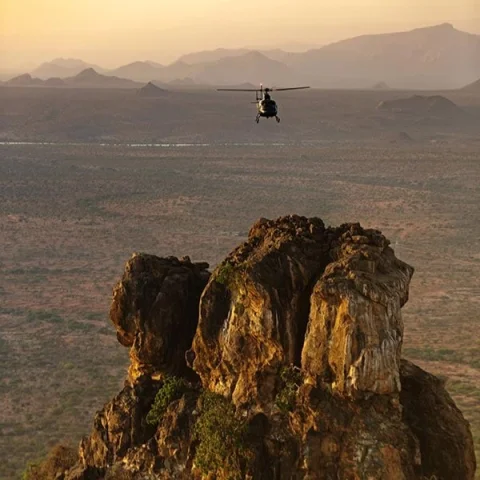
- Short flight times between parks. Many of Kenya's premier reserves are a 30–60 minute domestic flight from Nairobi, which matters enormously with children — long, exhausting road transfers are avoidable if you plan the route well.
- A wide range of family-oriented lodges and camps. From family tents with interconnecting rooms to lodges with supervised kids' programes, Kenya's accommodation options have matured well beyond the "adults-only luxury camp" stereotype.
- Guides experienced with young travelers. Good guides know how to read a child's attention span and adjust a game drive accordingly — something that makes an enormous difference to how the day actually feels.
- A manageable flight from most of the world. Direct or one-stop flights from the UK, much of Europe, and increasingly the US and Middle East make Nairobi more reachable than many people assume, and the time zone alignment with Europe in particular means minimal jet lag for kids.
None of this happens by accident and none of it guarantees a good trip on its own. It's the planning layered on top the itinerary structure, the age-appropriate activity choices, the pacing that turns "Kenya is family-friendly in theory" into "this was the best trip our family has ever taken."
The Real Question Isn't "Can Kids Do a Safari?" — It's "How Should This Safari Be Different?"
A family safari shouldn't be an adult itinerary with children squeezed into it. It needs to be planned differently, from the ground up and that's where a lot of otherwise excellent safari operators quietly fall short — because their strength is built around a standard, adult-paced circuit rather than a family one.
Here's what actually changes when children are part of the trip:
Shorter game drives, more often. Rather than one long morning drive and one long afternoon drive, we often build in shorter, more frequent outings for families with younger children enough time to see meaningful wildlife without pushing past a child's genuine attention span, with breaks back at camp for downtime, pool time, or a nap.
Built-in flexibility. Kids don't always cooperate with a fixed schedule, and a good family itinerary has slack built into it — the ability to head back to camp early, skip an activity, or extend a stop at a sighting a child is excited about, without unravelling the rest of the day.
Age-appropriate accommodation choices. Not every luxury camp is set up for families — some have strict age minimums, unfenced walkways between raised tents, or a layout that makes supervising a toddler genuinely difficult. We only recommend properties that are actually built, or at minimum genuinely willing, to host children safely and comfortably.
Activities beyond the game drive. Many family-friendly camps and lodges now offer junior ranger programes, bush craft lessons, guided nature walks scaled for children, or simple additions like a bug hunt around camp — activities that give kids ownership of the experience rather than just observing from the back seat of a vehicle.
A realistic pace across the whole trip. Cramming four parks into seven days might work for a couple on their second or third African trip. It's a recipe for exhaustion with young children. Family itineraries we build tend to favor fewer stops, longer stays in each, and more time simply existing at camp rather than constantly repacking and moving on.
What Ages Work Best, and What to Expect at Each Stage
Parents often ask us directly: how young is too young? There's no universal answer, but here's how it tends to break down in practice worth bookmarking if you're weighing this for your own family:
Toddlers and pre-schoolers (roughly 2–5 years).This is the age range that requires the most careful planning, not because Kenya isn't suitable, but because attention spans, nap schedules, and safety considerations around open vehicles and unfenced camps genuinely matter. Some camps set a minimum age of 6 or 7 for exactly this reason, particularly properties with elevated walkways or open-plan tents near wildlife corridors. For this age group, we typically recommend private vehicles, shorter drives, family-suite accommodation with enclosed or fully fenced grounds, and lodges (rather than remote mobile camps) where facilities and flexibility are greater.
Young children (roughly 6–11 years). This tends to be the sweet spot for a first family safari. Children in this range are usually old enough to sit through a well-paced game drive, genuinely engaged by junior ranger activities, and old enough to remember the experience vividly for years afterward. Most properties that welcome children set their minimum age somewhere in this bracket, which opens up a much wider range of camps and lodges to choose from.
Teenagers (12+). Safari with teens can look almost like an adult itinerary, with a few adjustments — walking safaris, hot air balloon flights, and more immersive cultural visits with Maasai or Samburu communities tend to land well with this age group, and many teens are old enough to properly engage with conservation-focused activities like rhino tracking or a visit to the David Sheldrick Wildlife Trust.
We ask about each child's age, temperament, and travel experience specifically during planning, because the right camp for a confident, well-travelled nine-year-old is often not the right camp for a first-time-flying four-year-old, even though both fall broadly under "family safari."
Building the Itinerary: What a Well-Paced Family Trip Actually Looks Like
To make this concrete, here's roughly how we might structure a seven- to eight-day family holiday combining safari with other Kenyan experiences, adjusted heavily depending on the ages involved:
- Day 1–2: Nairobi. Arrival, rest and a gentle introduction to Kenya through genuinely kid-friendly attractions — the Giraffe Centre, where children can hand-feed giraffes at eye level and the David Sheldrick Wildlife Trust, where orphaned elephants are cared for and the daily public feeding session is a reliable highlight for almost any age. Nairobi holds up perfectly well as more than just a stopover a day or two here, done properly, is a genuine part of the holiday.
- Day 3–5: A family-oriented camp in the Maasai Mara or a Laikipia conservancy. For families who do want the wildlife chapter, this is usually the heart of it — shorter, well-paced game drives, junior ranger or bush craft activities, and enough downtime that nobody, adult or child, feels rushed.
- Day 6–8: The coast, or a different pace entirely. Diani and Watamu have become genuinely popular family additions — warm, calm water, resorts built around family activities, and a completely different rhythm after a few days of early-morning game drives. For families who'd rather skip the safari altogether, a Diani- or Watamu-based holiday with day trips to nearby attractions works well as a standalone trip in its own right.
- Day 9: Departure, with enough buffer built in that a delayed domestic flight doesn't turn into a crisis.
Every one of these pieces flexes based on the family's ages, interests, and time available. Some families want the classic safari-plus-beach combination; others want a slower, single-region trip focused entirely on the coast or entirely on Nairobi and its surrounds; others still want the fuller safari circuit with no beach time at all. We plan for the family in front of us, not a template.
Beyond the Safari: Other Kenya Experiences Families Love
Safari understandably gets most of the attention in Kenya trip planning, but plenty of families build a full, memorable holiday around experiences that have nothing to do with game drives — or use them to round out a shorter safari with real variety.
Diani and Watamu, for beach time. Kenya's coast offers warm, calm, family-friendly swimming, snorkelling on the reef, and a noticeably slower pace than the safari circuit. Many resorts here are built specifically around families, with kids' clubs, shallow pools, and activities like glass-bottomed boat trips that work well for almost any age.
Lamu, for older children and culture. Lamu Old Town's car-free streets, dhow sailing, and Swahili architecture make for a genuinely different kind of family experience — better suited to families with older children who'll engage with the history and culture rather than very young ones.
Hell's Gate National Park, for active families. Unusually for a Kenyan park, Hell's Gate allows cycling and walking among the wildlife (mostly non-predatory species), which tends to be a hit with more active families and slightly older children who want to do something more physical than sit in a vehicle.
Nairobi itself, as more than a gateway. Beyond the Giraffe Centre and Sheldrick Trust, Nairobi has a genuinely good food scene, the Karen Blixen Museum for families interested in the *Out of Africa* history, and Nairobi National Park — a proper safari experience within the city limits, useful for families with a tight schedule or a long layover.
Lake Naivasha, for a gentler wildlife encounter. Boat trips with close hippo viewing and birdwatching offer a lower-key alternative to a full game drive, often a good stepping stone for very young children before or instead of a national park visit.
None of this is presented instead of safari for most families, a trip that blends two or three of these regions makes for a considerably richer holiday than five days in one park. We help families figure out the right mix rather than assuming safari is automatically the centrepiece.
Safety, Handled Properly
Safety looks different with children than it does for adult travelers, and it needs to be treated that way rather than assumed to carry over automatically.
Guides who understand child safety on a game drive. This means clear, calmly enforced rules around staying seated, not standing up unexpectedly near wildlife, and keeping noise at a level that doesn't disturb animals or provoke a reaction — communicated in a way that keeps children engaged rather than anxious.
Camp layout matters more than people expect. We specifically check whether a property's walkways are fenced or open, whether tents are raised or ground-level, and whether staff routinely escort guests after dark — standard practice at most reputable camps, but worth confirming rather than assuming, especially with young children who may wander.
Medical considerations, discussed honestly. Malaria prevention needs particular attention with young children, and we talk parents through the real options — appropriate prophylaxis, mosquito nets, repellents suitable for children's skin — well before departure, alongside general guidance on altitude (relevant for stops like the Aberdares) and sun exposure at altitude near the equator, which catches many visitors off guard.
A reachable contact throughout the trip. Exactly as with our solo traveler itineraries, every family has a direct line to our team for the duration of the trip — not just a booking confirmation and an itinerary PDF.
None of this is about presenting Kenya as risky. It's about the fact that "safe for adults" and "safe and comfortable for a four-year-old" are genuinely different standards, and we plan to the second one when children are travelling.
Choosing the Right Accommodation: What We Actually Look For
Not every beautiful camp is a good family camp, and the gap between marketing photography and practical suitability for children can be significant. When we shortlist properties for a family itinerary, we're specifically checking:
- Family tents or interconnecting rooms, so parents and children can be close without everyone sharing a single space for a week
- A genuine kids' programme, where one exists — not just a token mention on a website, but actual staff trained to run age-appropriate activities
- Pool facilities, which matter more with children than most adult travelers realize — a place to cool off and burn energy between drives is genuinely valuable
- Flexible dining, including simpler menu options and realistic mealtimes rather than a single, late, formal sitting
- A minimum-age policy that actually matches your children's ages — checked and confirmed before booking, not discovered on arrival
Some of Kenya's most well-regarded family-friendly properties combine several of these well — think camps with dedicated family suites, supervised junior ranger programmes, and swimming pools alongside the standard game drive offering. We track which properties are genuinely strong for families season to season, because standards and offerings shift, and a recommendation from three years ago isn't automatically still accurate.
What It Costs, and Where Families Can Genuinely Save
Family safari budgets are shaped by a few specific factors worth understanding upfront.
Child rates exist, and matter. Many lodges and camps offer meaningful discounts for children sharing a room with parents, and some waive park fees entirely for children under a certain age (commonly under 3, with reduced rates up to around 18 in many parks). This can make a real difference to overall cost, and we build it into every family quote rather than pricing children at adult rates by default.
Fewer, longer stays reduce cost as well as stress. Every additional location adds a domestic flight, which adds up quickly for a family of four or five. A itinerary built around two or three well-chosen locations rather than five is usually both calmer and considerably more affordable.
Self-catering or family-suite options exist at multiple price points. Family travel doesn't have to mean the most expensive luxury tier — there are excellent, safe, well-run family lodges across the budget-to-luxury spectrum, and we're happy to work within whatever range genuinely fits.
Domestic flights vs. road transfers is a real trade-off. Flying saves time and tiredness but costs more; driving is cheaper but adds hours in a vehicle with children. We talk through this honestly rather than defaulting to whichever earns more — the right answer depends entirely on your family's tolerance for road time and your budget.
We itemise all of this clearly in every quote, so you can see exactly where the cost sits and where there's room to adjust if needed.
Beyond the Game Drive: What Actually Keeps Kids Engaged
The best family safaris we plan rarely rely on the game drive alone to hold a child's attention for a full week. A few additions consistently work well:
Junior ranger programmes, offered at many family-oriented camps, where children earn a certificate through age-appropriate bush skills, tracking basics, and simple conservation lessons — genuinely engaging rather than a marketing gimmick at the properties that do it well.
The David Sheldrick Wildlife Trust and Giraffe Centre in Nairobi, both reliably popular with children of almost any age, and a strong, gentle introduction to Kenyan wildlife before heading out to the parks.
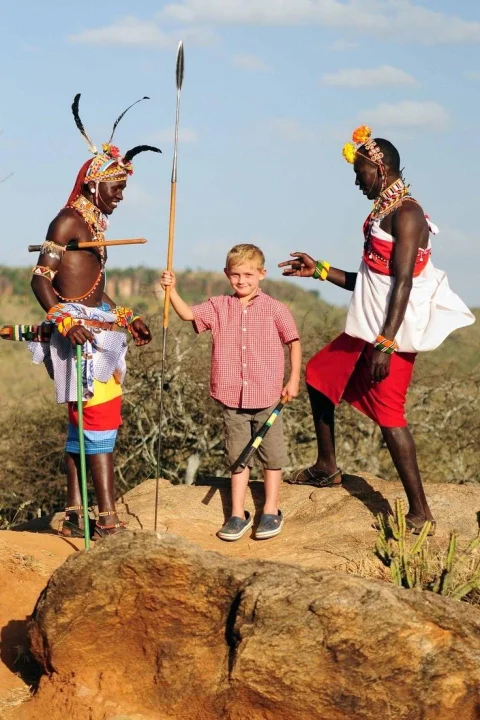
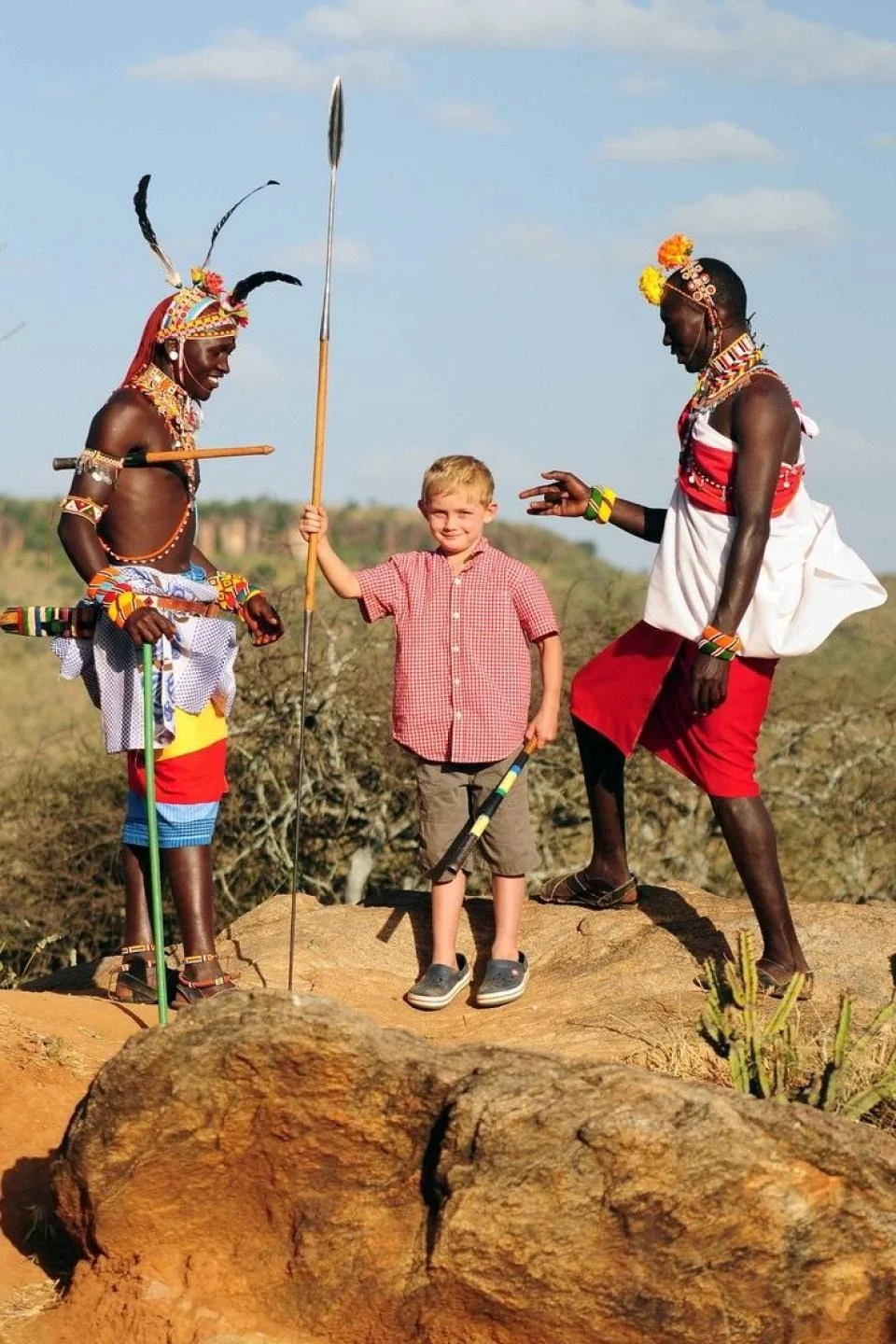
Cultural visits with Maasai or Samburu communities, which, done respectfully and through operators with genuine community relationships, can be a memorable and educational experience for older children in particular.
Simple, low-key additions at camp — a bush breakfast, a short guided nature walk around the property, stargazing with a guide pointing out constellations — that don't require a full game drive but add texture and variety to the day.
Swimming, downtime, and simply being at camp. It's easy to over-plan a family trip in the belief that every hour needs an activity. Some of the best feedback we get from parents is about the unstructured time — an afternoon by the pool, a slow breakfast watching monkeys in the trees, nothing scheduled at all.
Packing for a Family Trip: What's Actually Different
A standard safari packing list — neutral clothing, layers, sun protection, insect repellent — mostly holds for families too, but a few things genuinely change when children are involved.
Bring more entertainment than you think you'll need for the flights and downtime, but resist the urge to overplan camp time itself — most children find plenty to occupy them once they're actually there, watching monkeys in the trees or chatting with camp staff. A few familiar comfort items — a favourite stuffed animal, a specific snack — matter more on a long trip than they might at home, simply because everything else around your child is new and unfamiliar.
Layering matters even more with kids, since early morning game drives can be genuinely cold even in a country most people associate with heat, and an uncomfortable, shivering child at 6am rarely makes for a good start to the day. A warm layer, a hat, and closed shoes for the first hour of any morning drive go a long way.
Basic first aid and familiar medications are worth packing directly rather than relying on availability at camp — children's paracetamol, rehydration salts, plasters, and anything specific to your child's needs. Camps are generally well equipped for minor issues, but having what you know works, in the dose you know is right, removes one variable from an unfamiliar setting.
Binoculars sized for children are a small but meaningful addition — a lightweight, simplified pair a child can actually hold steady makes a genuine difference to how engaged they are during a drive, rather than constantly asking to borrow an adult's.
We include a tailored packing guide with every family booking, adjusted for the specific ages of your children and the properties on your itinerary, rather than a generic list pulled from a template.
Common Questions Parents Ask Us
Is malaria prophylaxis safe for young children?
Most anti-malarial medications have paediatric dosing, but the right choice depends on your child's age and weight, and it's a conversation worth having directly with a travel clinic well before departure. We flag which regions on your itinerary carry higher malaria risk so you and your doctor have the full picture.
What if my child gets sick or injured on the trip?
Every property we work with has established protocols for medical situations, and many are linked to emergency evacuation services covering remote areas — a genuine safety net most travellers never think to ask about until they need it. We confirm this coverage as part of planning every family trip, not as an afterthought.
Will there be other children at camp?
It varies by property and season, and we can specifically target camps known for a lively family atmosphere during school holiday periods if that's something your children would enjoy, or quieter properties if you'd prefer a more contained family experience.
How do we handle the flight to Kenya itself with young kids?
Overnight flights from Europe often work well with children's sleep schedules, and we can advise on routing, direct versus connecting options, and realistic layover buffers so the journey itself doesn't undercut the trip before it's begun.
What's the single biggest mistake families make planning this themselves?
Overpacking the itinerary. It's tempting to want to see everything — every park, every activity — in one trip, but the families who come back saying the trip was genuinely relaxing are almost always the ones who chose fewer locations and gave themselves real time in each.
A Trip Parents Actually Remember Well
The families who travel with MTP tend to describe the same thing afterward, in different words: that the trip felt calm rather than rushed, that their children were genuinely engaged rather than merely present, and that the logistics — flights, transfers, meals, timing simply worked, freeing them up to actually be present with their kids instead of managing the trip.
That's not an accident. It's the result of building the itinerary around the family in front of us — their children's ages, their pace, their interests — rather than trimming an adult circuit down to fit.
What Makes MTP the Right Partner for a Family Holiday
Stripped down to specifics, here's what that actually means in practice:
1. We plan family itineraries as their own category, with pacing, activity choices, and accommodation selected specifically for the ages of your children.
2. We don't default to a safari-only template — coast, Nairobi and active regions like Hell's Gate are planned with the same care, whether as the centrepiece of your trip or alongside a few days of game drives.
3. We only recommend properties genuinely suited to families, verified against age policies, layout safety, and real (not just advertised) kids' programming.
4. We build in flexibility, so a tired toddler or an excited nine-year-old doesn't derail the day.
5. We're transparent about costs, including child rates and where the real savings and trade-offs are.
6. You have a direct, reachable contact throughout your trip, for the inevitable small questions that come up when travelling with kids in an unfamiliar place.
Ready to Plan Your Family's Kenya Holiday
Kenya doesn't ask families to choose between an extraordinary wildlife experience and a genuinely manageable trip with children — and it doesn't ask them to choose safari over everything else Kenya has to offer, either. With the right planning, a family holiday here can be as much about a slow week on the coast, a cycling afternoon at Hell's Gate, or a couple of days properly exploring Nairobi as it is about a game drive.
That's the trip MTP builds, every time.
Tell us your children's ages, how many days you have, and what kind of trip you're picturing — safari, coast, city, or a mix and we'll come back with an itinerary built specifically around your family.
Save This, Share It, Come Back to It
Planning a family safari usually isn't a one-sitting decision it's the kind of trip that gets discussed over a few weeks, shared in a family WhatsApp group, and revisited more than once before booking. If this guide was useful, bookmark it for when you're ready to compare dates, or send it to the friend or sibling who's been talking about "doing Africa with the kids someday."
And once you've travelled with us: we'd genuinely love to hear how it went, and there's no better recommendation for another parent weighing this decision than hearing it from a family who's already done it. Most of our new family bookings come from exactly that — one parent telling another.